Using Tools with Intelligence
Using not abusing AI: Part one.

In my last pontification, I shared how I used a cross-platform wiki program to organise my notes.
I started my writing by the seat of my pants. While I found a strong idea could get me so far, say, twenty or thirty thousand words, I became unstuck in the middle because my imagination tended towards open-ended serial storytelling, the child in me didn’t like a good story to end, and that enthusiasm acted like a parking brake on my imagination.
To overcome this, I became a plotter, first with pen-and-paper notebooks, and then digitally.
I’ve always been a technophile, as my father before me. I remember child-me marvelling at the first digital watches, pocket calculators, and home computers. The internet is an adult experience.
Right now, I am seeing a lot of shade cast on AI tools.
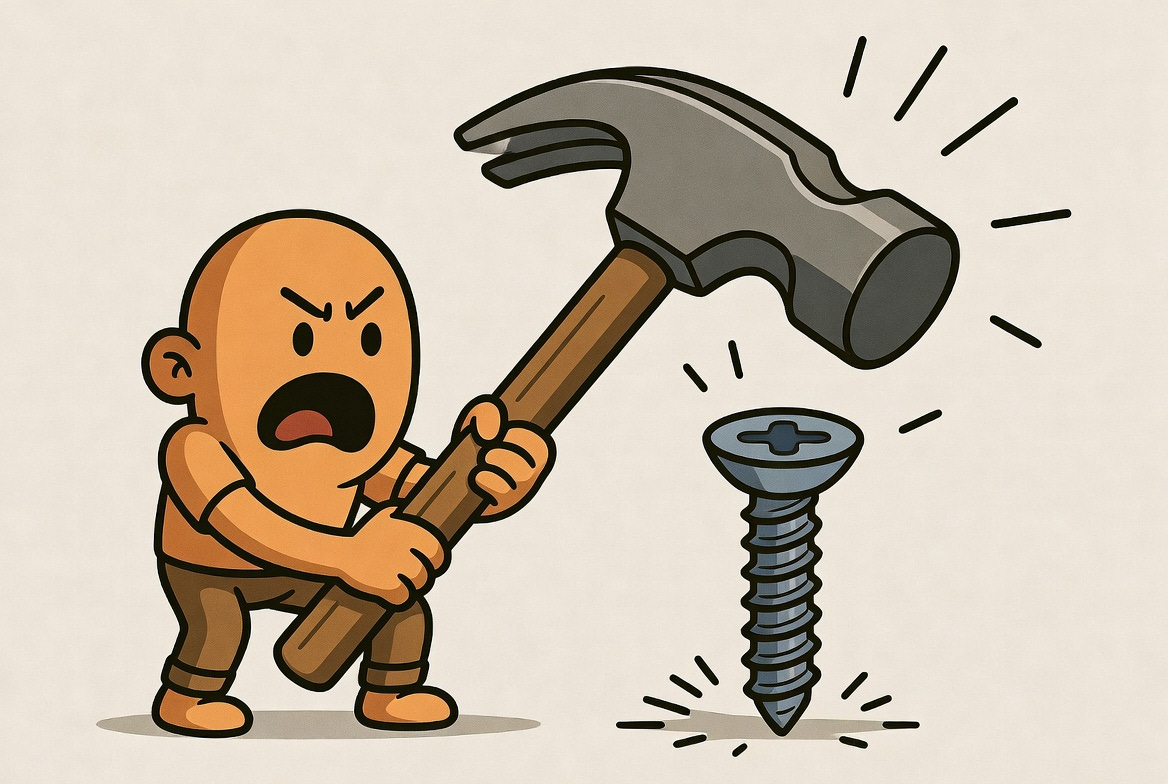
I subtitled my first essay on tools with the adage ‘if your only tool is a hammer, everything starts to look like a nail’; equally, if you criticise a hammer for being an ineffective screwdriver, you are missing the point.
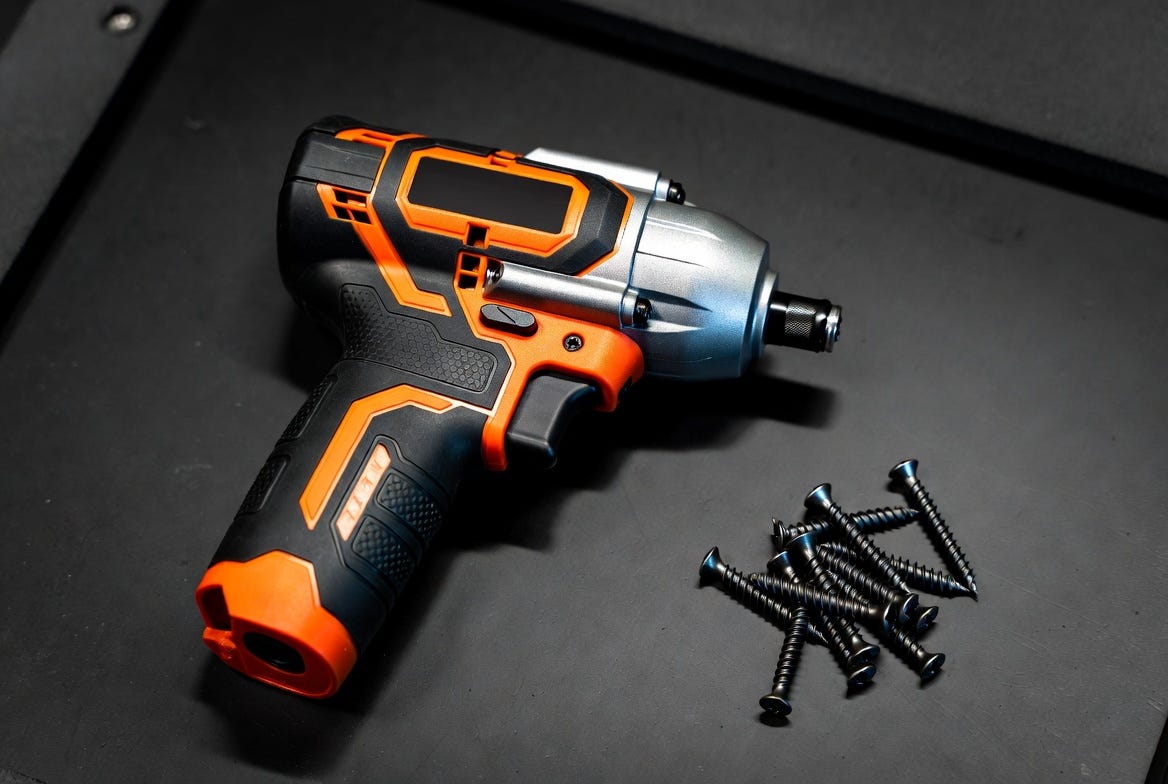
I use power tools from time to time; a drill or impact driver can take the wristache out of driving screws. It’s still easy to screw up because if you have the wrong head on the driver, or even misalign the correct one, the screw will likely drive in, but with the grating, even a whirring sound as both the slots and the edge of the screwdriver bit are ground away. It’s screwed in, but it’s now very hard to unscrew, as the screw head is ruined.
I feel much of the criticism aimed at AI is down to a good tool being misused.
Much like a hammer is a poor way to drive a screw, using AI to write a story is a poor use of the AI. I won’t bother to list the many ways AI creates “slop”, which is the go-to perjorative.
Rather, I’m going to talk about why I find AI useful, how I use it, and where I don’t.
First, in this article, I’ll address the use of AI as a research tool.
As a writer of fiction, I don’t think it is essential that my books reflect reality now or in the past with near-perfect accuracy; my fictional characters exist in my imagined world, not the real one.
If I’m writing a work of fact, a reference book, the standards of absolute accuracy are higher; for fiction, I feel a reasonable test is that if a casual reader pulls up a web article from say Grokepedia to read about Jamaica in 1655, the events of my story won’t seem anachronistic.
That’s why I think AI, if used intelligently as a tool, can help build a richer, deeper imaginary world.
AI is a powerful search tool. I cut my teeth using early search engines. I remember the joy of Lycos, trying Jeeves, and watching Google grow and then dominate. Criticising people for using AI to find out information is like someone in the early years of this century criticising an author for using Google instead of going to the library.
That’s not a criticism without merit; many resources were not available online then, and some still aren’t. An internet search can give you incomplete, even false information.
The same is true for AI.
What AI does well is combine what in the past would have required multiple searches, parsing multiple pages of results. A question, “Describe Bombay in 1750-60”, gives an overview in a minute that would have taken many minutes to collate.
Where this touches my process is doing research, which then folds into the plot, and when that’s historical or geographical, information feeds into imagination and so ideas.
The caveat that AI can get things wrong is not an overcautious disclaimer. When a time or place is key to a story, I double-check, and then again…
I developed a habit of asking for an anachronism and a fact check in a new thread, and even a different AI altogether.
This followed an adventure in Jamaica in 1655. The year the English wrested control from the Spanish. AIs get things wrong; longer threads are more prone to what is termed “hallucination”. They are also programmed to please. I can’t be sure from memory how much came down to a poorly worded question from me or the AI’s mistake. However, I developed a long and winding plot involving Spanish Landowners in Jamaica—with the AI’s help, more on that process later. The point here is that, by and large, the Spanish left, leaving no significant ‘landowning’ presence. Using this idea would be anachronistic. The AI read my request to create fiction as more important than historical accuracy—at that moment.
That leads me to the “fiction” question: What exactly am I asking AI to make up?
In this example, Jamaica, its houses, buildings, and its people that might have reasonably existed. For example, earth, stone or wooden floors? Mundane details that add depth. I can imagine a house, sure, but when this isn’t a lived experience, I can’t know. I need information that I can use to imagine what happens next. Sure, I could ‘google’ or go to the library and search for a book on Architecture in the Caribbean. Or in a hot minute, I can use multiple AIs to look for me.
What I’m not doing is asking the AI to write the story for me, any more than if I read a tome on houses in the C17th in the new world, and noted the descriptions therein. Sure, I could just copy and paste the AI result into my Word Processor, just like I could plagiarise the library book, or a web page.
Writing the story in my own words and my own voice, that’s on me—it’s not the tool’s fault if I abuse it.
More on how AI can help and hinder the creative process next time…
Library research! That is something I have not done in years.
Granted the little podunk library by me is slim pickings for even books and inter-library loans is at a snails pace. I can’t imagine how to get it done quickly in the thought of the moment while writing!
Search engines are flawed, and figuring out how to word something, to get better results, is maddening. But as you state, multiple search engines and AI can help find and get the right words with satisfactory results without adding fictional content.