Tools with Intelligence III
Character building

When a writer commences a story, there’s usually a sense of an idea. Some stories, of course, begin with research, and other times, reading for pleasure, factual or fictional works can inspire. Nonetheless, at some point, the players take shape.
I can’t imagine beginning without some sense of who the protagonist and antagonist are. Research using old-school textbooks, the internet via search engines, or AI can help, but I, for one, want to be in the driver’s seat for all the twisty bits of this particular stretch of road. How old, how tall, how smart, how moral, for my main players, I’m interested and invested.
There are exceptions, of course. In something like Abraham Lincoln: Vampire Hunter, the historical figures come with built-in guardrails. Paint Lincoln short, pudgy, and blond, and the whole thing collapses into absurdity.
However, what about the bit players?
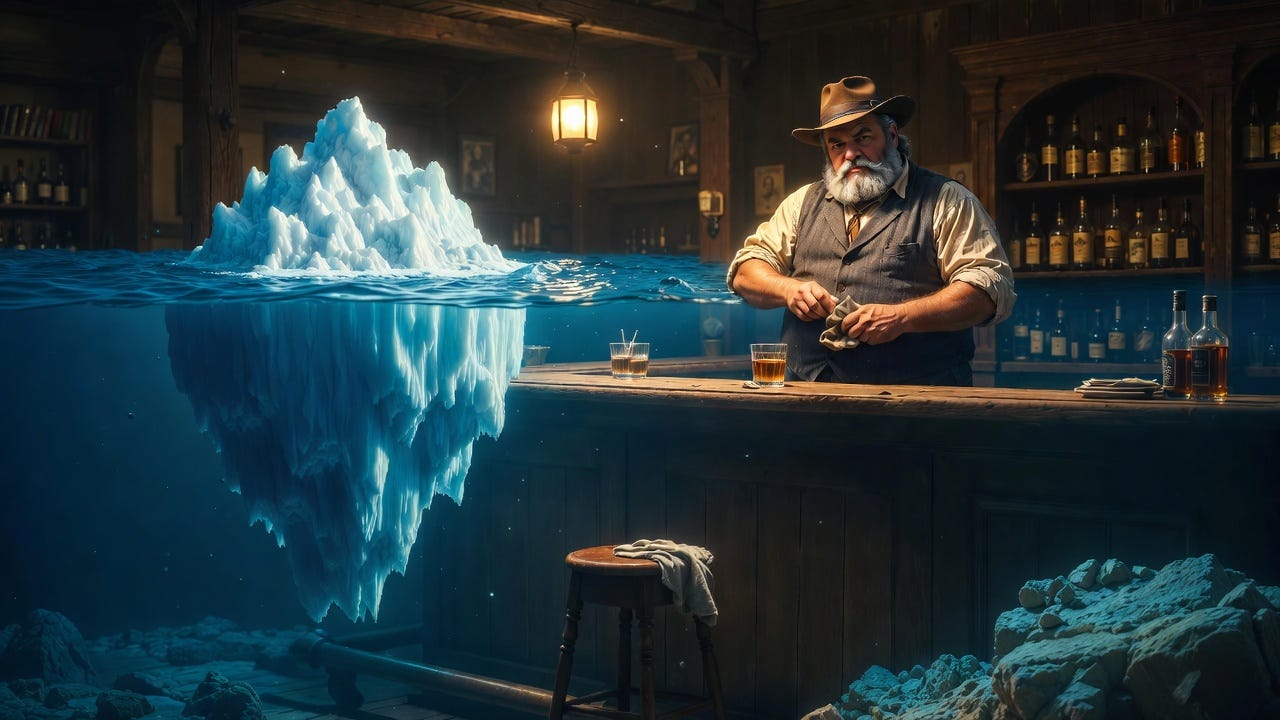
Say Random Hero encounters the barman in a tavern, or let’s go with a bartender in a Saloon. Who is the bearded potbellied contrarian selling alcoholic beverages?
Results vary: a writer may go on an odyssey, creating a complex backstory, now enamoured with their new creation, after investing so much into crafting BPC, it all lands on the page. However, the reader, who wants to know what happens next to RH, is now irritated that several pages describe BPC’s tragic but noble descent into middle-aged mundanity.
It’s not a bad thing that BPC’s backstory is rich, but ah, here comes the Hemingway Iceberg! It’s better to sink this Titanic low-tier supporting character’s epic life story, below the waterline, and get on with the story!
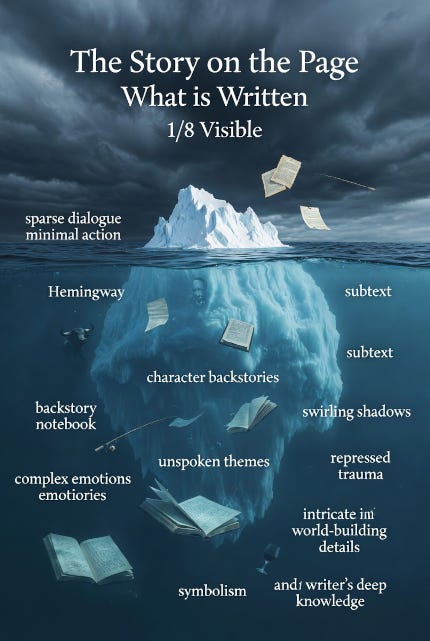
In short, it’s good to have that depth, but it’s not necessarily good that depth ends up on the page.
The opposite extreme occurs, too. If RH has more than a “Sasperalla, please” conversation with BPC, it’s probably necessary to give BPC a name and have a sense of who he is. Having conversations play out with unnamed characters can be as much of a bump as pages winding along a tangent that doesn’t serve the main character’s narrative.
There’s an understandable reason why an author might skimp on low-tier character development, and it’s the same as the reader’s disinterest in them; both are invested in RH’s hero’s journey, and want to get on with that.
So AI can help. Bear with me here. Consider a story set in WWII, the author mentions or has brief scenes involving wartime leaders. They have support staff—real people in history, with rich, complex lives themselves—and probably an entry in an online encyclopedia.
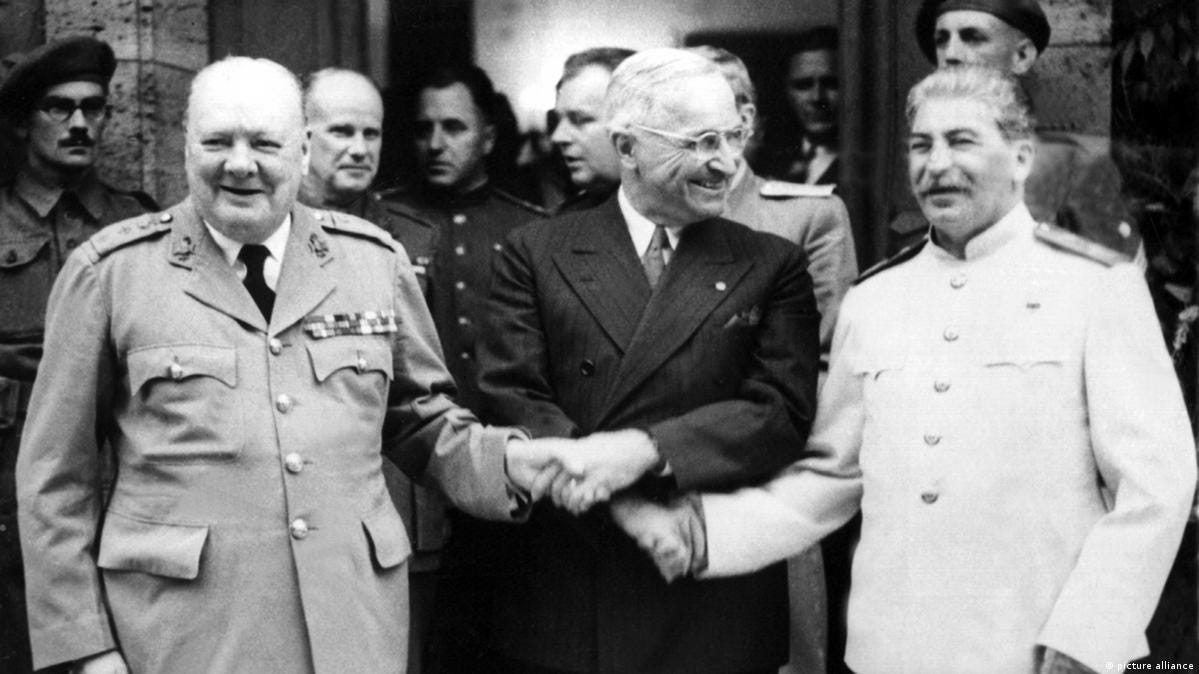
Is it necessary for a historical fiction to delve deeply into all of them?
Still, the historical fiction writer has the burden and benefit of their names, even photographs, and biographies.
In my last newsletter, I mentioned something I discovered as a kid, drawing and painting, the more things and colours I added to the image, did not make my picture better, often less proved more.
Writing is not so different, back to BPC, and how best to maximise my creative time?
I can ask AI to create BPC’s character sketch, setting the basic parameters, “a bearded potbellied contrarian selling alcoholic beverages in an old western saloon. C1880 in a generic western town.”
Caveats are obvious, I hope. I can change anything or nothing; if the AI suggests Silas Harlan, I can change that to Ephraim Roberts, or Daniel Bonny, etc. (Stuck for a name, I often go here) I can treat this as a basis for invention, flip the script, go from a “grumpy moral” fellow to “jocular sinner”, or consider it as a limiting gospel, like the biography of an aide to FDR in 1944.
Whether I create the boundaries, history does, or I borrow from AI, what I have is self-imposed guardrails. Now, when RH meets BPC, I have a reference point to work from; I can change and take BPC anywhere or nowhere. He might appear on the page for a moment, selling RH his drink, or function as a Chekhov’s gun to play a more significant role later in my book, or a sequel… I can plot that or pants it.
Is this cheating?
I don’t think so, no more than pulling a real biography from the library shelf, or Britannica’s pages, or C21st the internet, is a cheat. If my Western uses a cameo of Wyatt Earp, the reader would expect his characterisation to reflect the historical record.
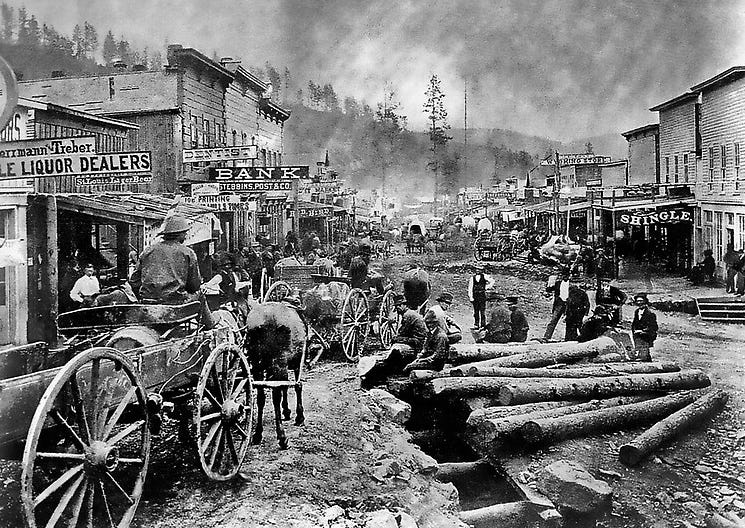
In effect, it’s like my childhood self setting out to draw using a blue-green colour range, rather than throwing the rainbow at the page. AI becomes a complex dice I throw, and what’s more, I can re-roll that die until I get results I like, and I can still colour outside the lines as much as I want.
I’m saving myself the heavy lifting of developing a complex biography for a character neither the reader nor I are invested in, but still having a full biography of who that character is. For how I keep track of this growing encyclopedia, look here.
What do you think? Is this approach cheating, lazy, or is it using tools intelligently?